Behind the Bouquet: Our Design Process
From your first email to the moment you hold your bouquet, here's exactly how we bring your floral vision to life.
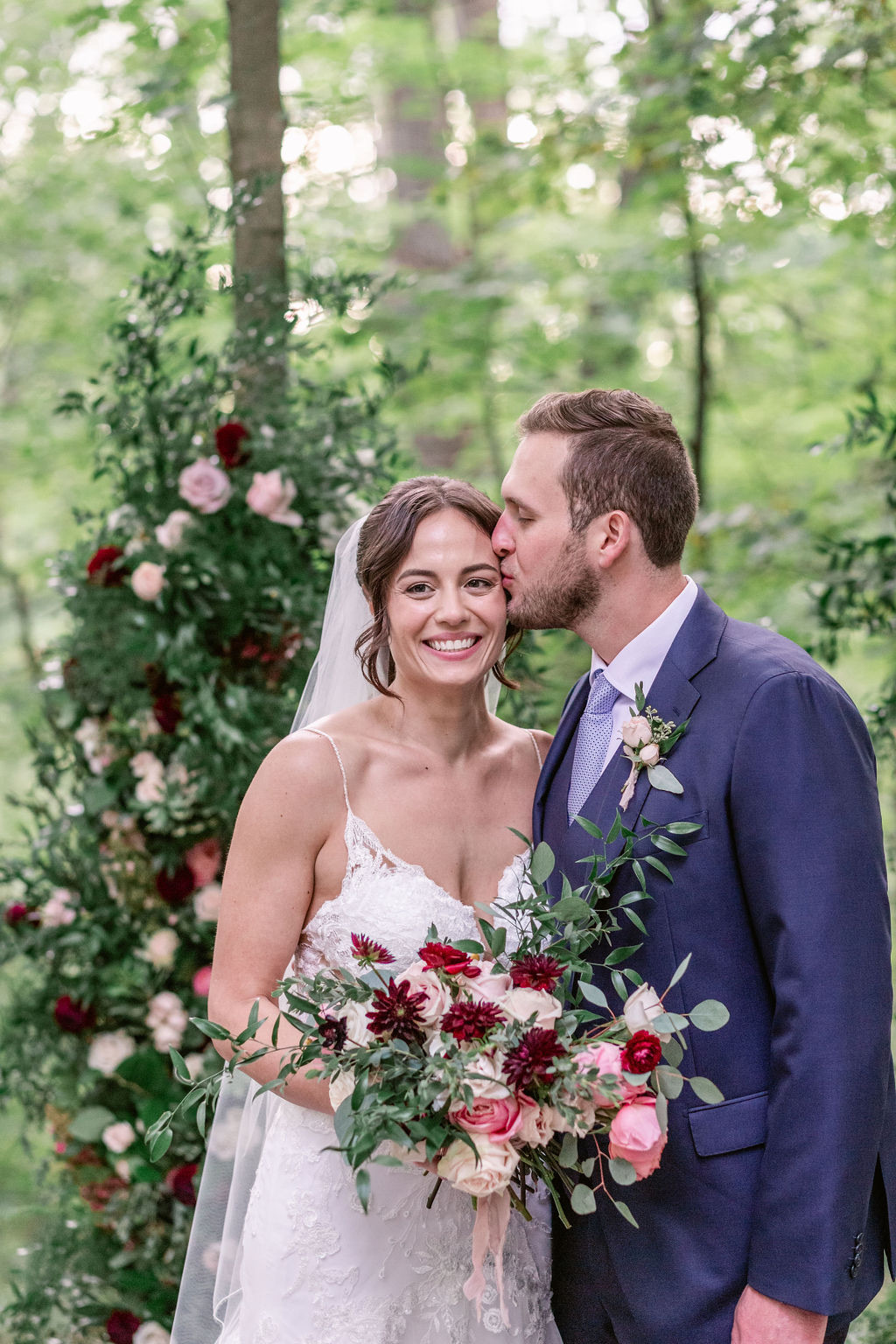
People sometimes ask if we just put the flowers together the morning of the wedding. The honest answer is that the morning of the wedding is the last step of a process that started months earlier. Here is what actually happens between your first email and the ceremony.
Step 1: The Inquiry
It all starts with an email or a form submission. We ask for the basics — your date, venue, estimated guest count, and a sense of your style. Pinterest boards are welcome (encouraged, actually). We're looking for the feeling you want, not a specific flower list.
Step 2: The Consultation
We get on a call, or meet in person, and get to know you properly. We'll talk about:
Your venue — the architecture, the lighting, indoor vs. outdoor. Your color palette — not just "blush and burgundy" but the specific mood you're going for. Your non-negotiables — maybe you've dreamed about peonies since you were twelve, or maybe your grandmother's favorite flower was lily of the valley. We want to know.
Step 3: The Proposal
We put together a detailed floral proposal — a document that outlines every arrangement for your day. Bridal bouquet, bridesmaids' bouquets, boutonnieres, ceremony pieces, reception centerpieces, accent arrangements. Each item includes a description of the design direction and pricing.
This isn't a generic template. Every proposal is custom. If you told us you love the way wildflowers look growing through a stone wall in Tuscany, that's what we're designing toward.
Step 4: The Mood Board
Once we're aligned on scope and budget, we create a visual mood board — color palette, texture references, bloom inspiration. This becomes our shared vision document. You sign off on it, and we get to work.
Step 5: Sourcing
This is where being a garden-style florist really matters. We source seasonally and locally whenever possible. We know which farms grow the best ranunculus, which wholesaler has the most fragrant garden roses, and when the first dahlias of the season will arrive.
We never order flowers from a catalog and hope for the best. We hand-select. Always.
Step 6: Design Day
The day before (or morning of) your wedding, the studio becomes a workshop. Buckets of conditioned blooms, spools of ribbon, and the steady hum of a design team in flow. Every arrangement is built by hand — no foam, no shortcuts. We use chicken wire grids and hand-tied techniques that keep flowers hydrated and natural-looking.
This is the part we love most. It is the part of the week where a cooler full of stems becomes a wedding.
Step 7: Installation
We deliver and install everything ourselves. Ceremony arch? We're climbing ladders. Reception tables? We're placing every bud vase, adjusting every candle. We don't leave until every detail is exactly right — and we usually stay to see the bride's reaction.
The Juniper Difference
Nothing on this list is remarkable on its own. The point is that all of it happens, in order, for every wedding — which is why the flowers look the way they do.
That is the process. It is less glamorous than the photographs suggest — there is a great deal of bucket-hauling — but nothing about it is left to chance.
Planning your own?
Our look book walks through the palettes, installations and process behind the weddings we design.
Send me the look bookAlready have a date? Start an inquiry